
Ward County Court Records After Arrest
The arrest-to-court path in Ward County uses two record systems. The jail record starts when a person is booked into Ward County Jail. The court record starts when a complaint, information, indictment, citation, or other charging instrument is filed in the proper court. The booking charge may later be amended, rejected, enhanced, reduced, or replaced by prosecutor-filed charges, so a jail intake note should not be treated as the final court record.
Felony and district-level matters route through the 143rd Judicial District. The Ward County District Attorney page identifies Sarah Stogner as district attorney for the 143rd Judicial District. Custody and booking details remain sheriff records, so use Ward County jail inmate records for the jail side and Ward County jail mugshots for booking-photo questions.
The district attorney page is a useful local source for the prosecutor office tied to felony court records after arrest.
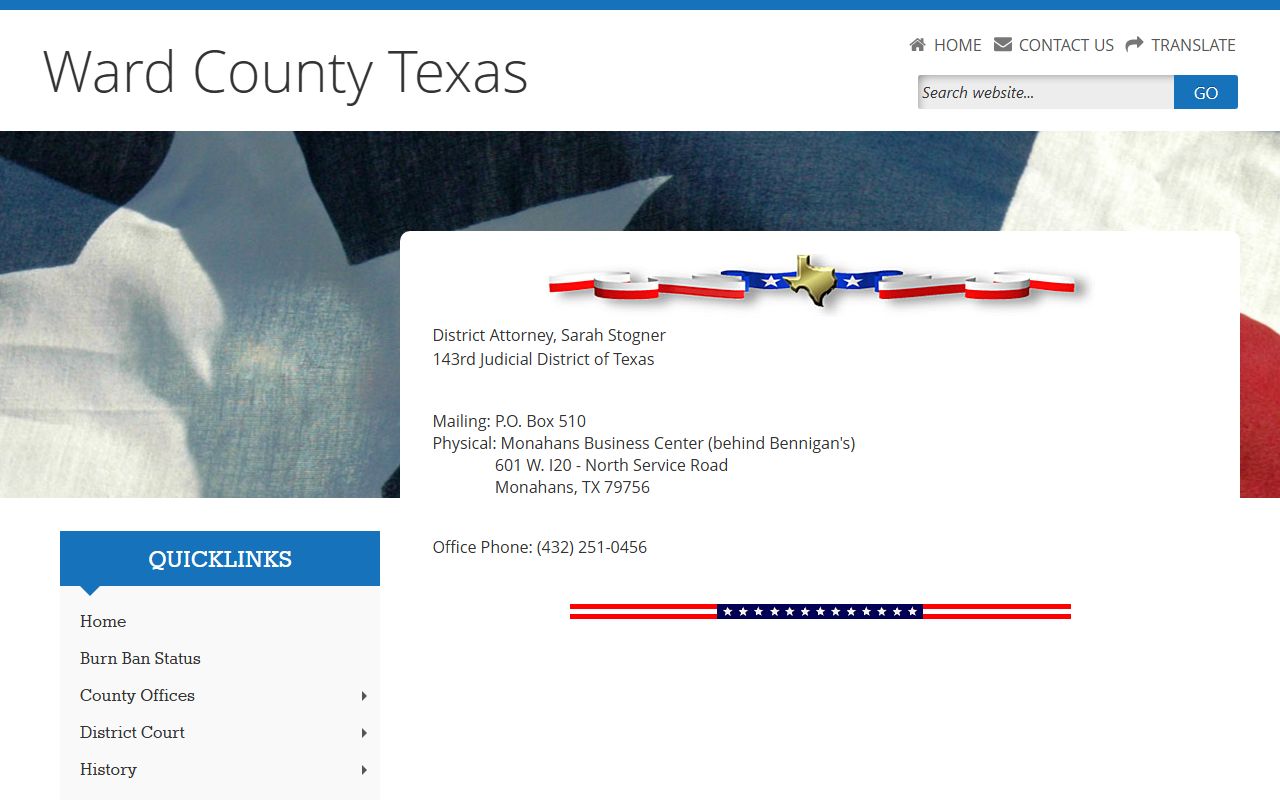
Prosecutor-filed charges may differ from the first booking charges entered at the jail.
Search Court Records After Arrest
Start by confirming the person's custody and booking name with the sheriff, then identify the charge level. Felony and district cases usually point to the district clerk and district court. County-level criminal matters may point to the county clerk. JP matters can involve the proper justice court. For statewide indexed court access, use re:SearchTX when Ward County records are available through that portal.
- Confirm the booking name and approximate arrest date through the sheriff or jail channel.
- Determine whether the matter is felony, county-level misdemeanor, JP/citation, or warrant related.
- Search re:SearchTX by defendant name or case number when the case is indexed there.
- Contact the district clerk, county clerk, or JP court when the record is not online.
- Use DPS only for statewide criminal-history products, not as a replacement for a local case file.
The re:SearchTX portal is the statewide case-search source referenced in the research.
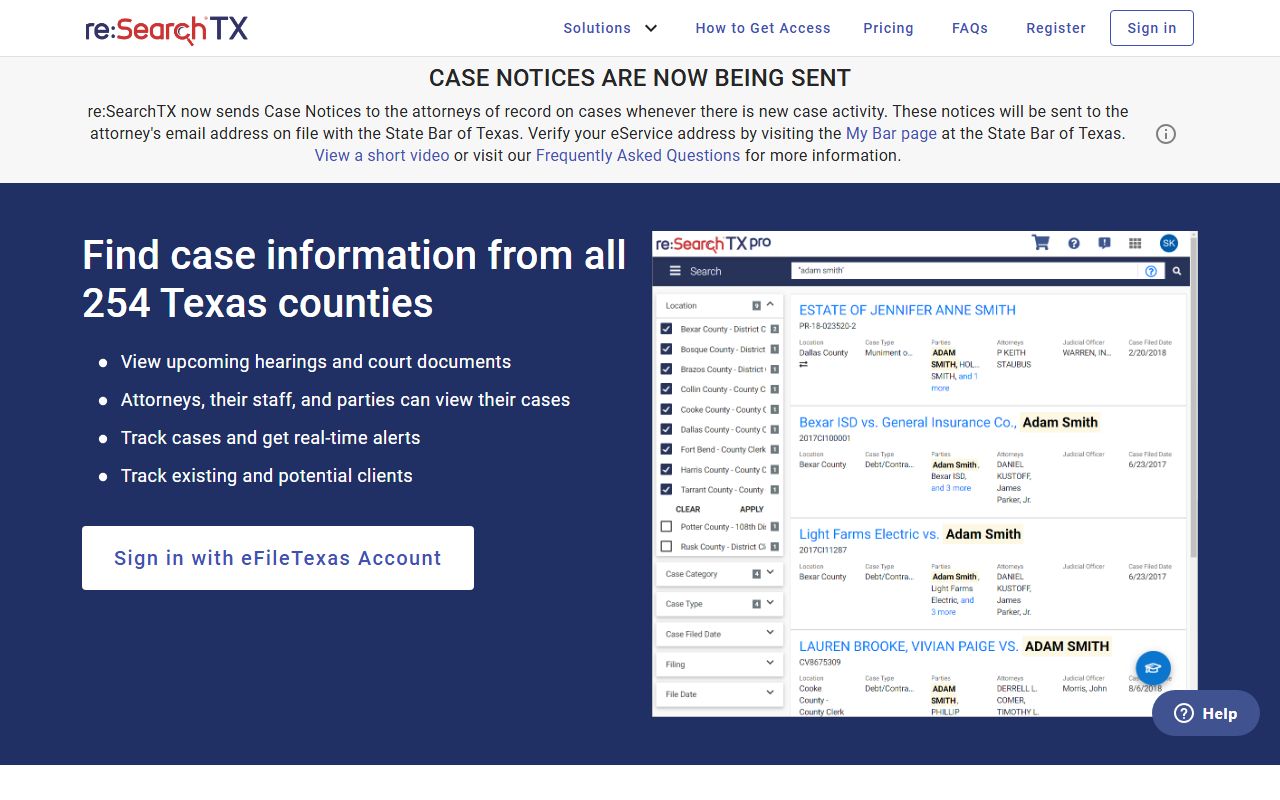
Some court records may require an account, a fee, or direct clerk access.
Ward County Court Record Offices
Ward County court-record routing is compact but specific. The courthouse is at 400 South Allen in Monahans, while the sheriff and jail are on East Monahans Parkway. The district clerk page lists Valerie Romo and notes that court filings may be submitted through eFile Texas and U.S. Mail, but official filings cannot be accepted by fax or email. The county clerk page lists Denise Valles and warns that the clerk is not required to perform searches except federal tax lien searches.
| Office | Use after arrest | Contact from research |
|---|---|---|
| District Clerk | Felony and district-level criminal records | Ward County Courthouse, P.O. Box 440, 432-943-2751 |
| County Clerk | County-level criminal matters where applicable | 400 S Allen, Suite 101, 432-943-3294/3295 |
| JP Precincts 1 and 4 | Class C, warrants, fine-only, lower-level proceedings | 3600 S Stockton Street, 432-943-5060 or 432-943-7227 |
| JP Precincts 2 and 3 | Class C, warrants, fine-only, lower-level proceedings | 3600 S Stockton Street, 432-943-7237 |
The county clerk page gives hours and limits that matter for case searches.
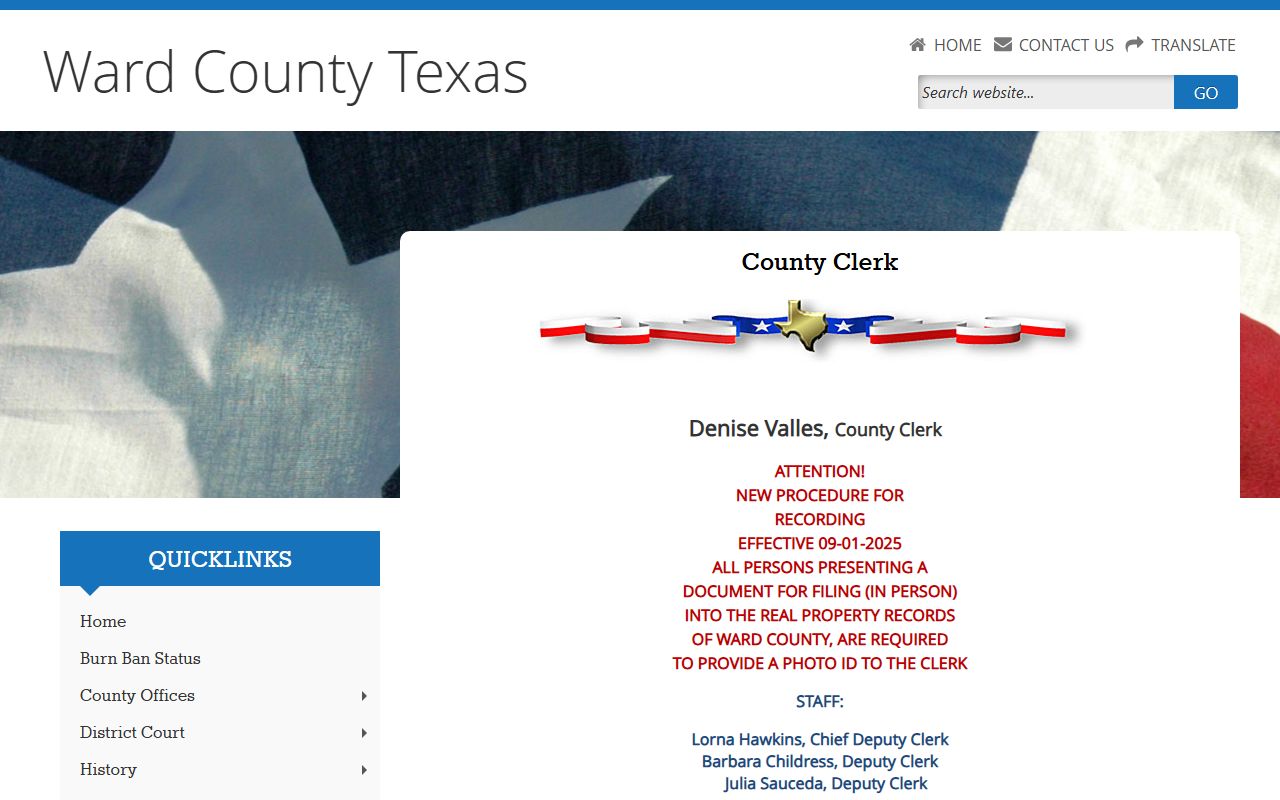
Bring names, dates, and case numbers because broad staff research may not be available.
Charges Filed After Arrest
The first jail booking charge is an intake label. The filed court charge appears when the prosecutor or court process creates a charging document. A complaint can start an accusation. An information is filed by a prosecutor in appropriate cases. An indictment comes from a grand jury and is common for felony prosecution. The case file, not the jail roster, is where charge status, hearings, and disposition are tracked.
| Document | Who creates it | Common use | Why it matters |
|---|---|---|---|
| Complaint | Officer, complainant, or prosecutor process | Early charge or lower-level case | Begins or supports a criminal accusation |
| Information | Prosecutor | Certain misdemeanor or felony pathways | States prosecutor-filed charges |
| Indictment | Grand jury | Felony prosecution | Shows charges approved for prosecution |
Ward County Charge Status
Charge status can change after arrest. A prosecutor may file a different charge than the jail booking entry. A court may amend, reduce, dismiss, or dispose of a charge. A person may also have bond conditions, warrants, or holds that affect release without changing the filed charge itself.
| Status | Meaning |
|---|---|
| Pending | The charge is filed or open and has not reached final disposition. |
| Amended or reduced | The filed charge changed from the earlier wording or level. |
| Dismissed | The court record reflects that the charge was not carried forward to conviction. |
| Convicted | The case ended in a guilty plea, verdict, or other conviction entry. |
| Warrant or capias | A court order may direct arrest or detention for a pending matter or missed appearance. |
Bond After Ward County Arrest
Texas bond is governed by Texas Code of Criminal Procedure Chapter 17. Ward County did not publish a local jail bond instruction page in the sources reviewed, so a caller should confirm custody, charge, court, bond type, and posting location before paying. If the case has already been filed, the correct clerk can help verify court entries and future settings.
| Bond type | Ward County context |
|---|---|
| Cash bond | Full amount paid under court or jail rules, subject to later case handling. |
| Surety bond | A licensed bondsman posts surety under a contract and fee arrangement. |
| Personal bond or PR bond | Release on a written promise and conditions without full cash deposit. |
| No-bond hold | Release is blocked until a court or holding agency changes the status. |
Ward County Warrants and Arrest
No official Ward County active warrant search or most-wanted database was located on the county site. A warrant question should start with the sheriff for custody routing and then move to the issuing court. District, county, and JP courts can each have case context, but clerks do not give legal advice. If a warrant may be active, an attorney or the issuing court is safer than appearing based only on a website result.
- Arrest warrant
- A court authorization to arrest for an alleged offense.
- Bench warrant or capias
- A warrant issued after missing court or violating a court order.
- Blue warrant
- A Texas parole warrant that can keep a person in custody.
- Fugitive hold
- A hold based on another jurisdiction's request.
Charges, Convictions, Sealed Records
Arrest, charge, and conviction are separate record stages. An arrest is the custody event. A charge is the accusation filed or pursued in court. A conviction is a final outcome through plea, verdict, or other court disposition. A dismissal does not automatically erase every public record, and clearing a record requires the right legal process.
| Charge | Conviction | |
|---|---|---|
| Stage | Accusation or filed count | Final finding or plea outcome |
| Proof | Not proof of guilt | Entered by court process |
| Where checked | Clerk or case portal | Clerk, DPS, and sometimes TDCJ after sentence |
Texas expunction rules are in Code of Criminal Procedure Chapter 55. Business use and removal duties tied to criminal-record publishing are addressed in Business and Commerce Code Chapter 109.
| Sealed or nondisclosed | Expunged | |
|---|---|---|
| Public view | Limited from ordinary public access | Removed or treated as not available by court order |
| Process | Requires eligibility and court action | Requires eligibility and court action |
| Practical point | Some agencies may still have limited access | Do not assume automatic deletion without an order |
DPS Criminal History Channel
Texas DPS criminal-history access is a separate statewide product, not the same as a Ward County court file. Use DPS when statewide criminal-history rules apply. Use the court clerk or re:SearchTX when the needed item is a local case document, setting, disposition, or charging instrument.
The Texas DPS crime records overview explains the statewide access channel.
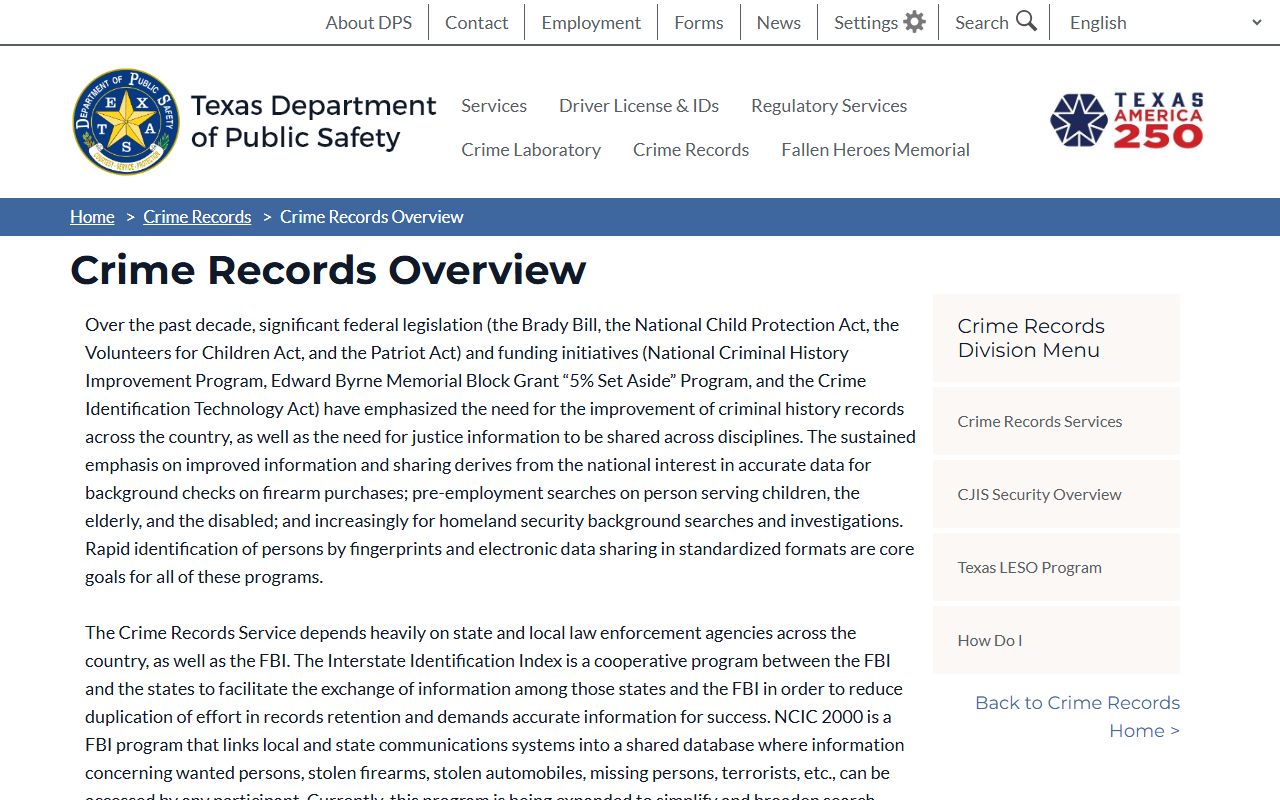
DPS may require account or fee steps and should not replace direct clerk verification.
Important: Do not use casual court or jail lookup data for employment, housing, credit, insurance, or any FCRA-regulated decision.
Public Record Search
Sponsored Results